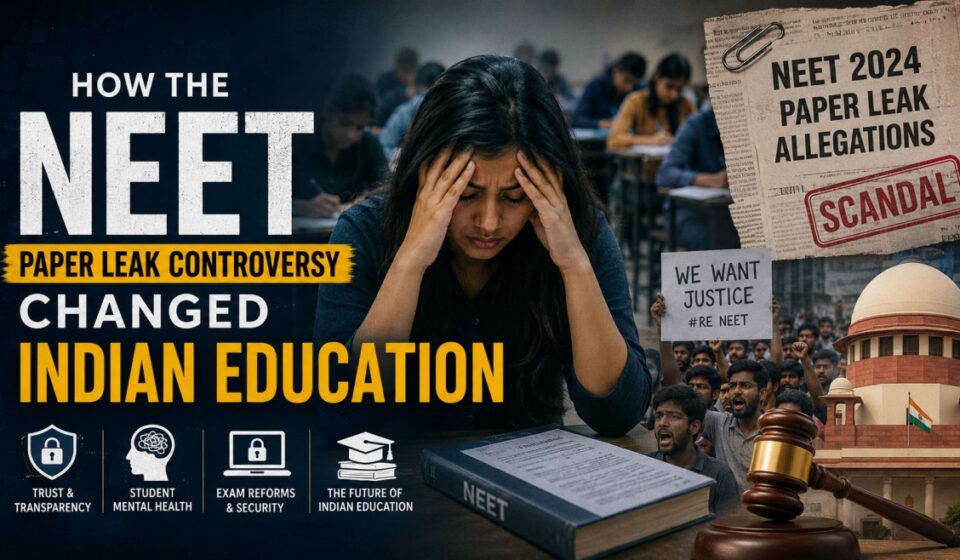

In India, few examinations carry as much weight as the National Eligibility cum Entrance Test (NEET). Every year, millions of students spend months—sometimes years—preparing for this single exam that determines their chances of entering a medical college. For many families, NEET is not just an examination; it represents dreams, sacrifices, and the hope of a better future.
That is why the NEET 2024 paper leak controversy shook the nation.
What began as allegations of irregularities soon turned into one of the biggest education controversies in recent years. Students protested, parents demanded answers, courts became involved, and questions were raised about the integrity of India’s examination system. While the immediate focus was on whether a re-exam should be conducted, the controversy ultimately sparked a much larger conversation about transparency, accountability, and trust in Indian education.
Understanding the Controversy
Shortly after the NEET 2024 results were announced, concerns started emerging from students and coaching institutes. Many questioned unusual score patterns, the awarding of grace marks, and reports suggesting that portions of the examination paper had been leaked before the test.
As social media amplified these concerns, students across the country began demanding a thorough investigation. The issue quickly gained national attention, forcing educational authorities, government agencies, and the judiciary to step in.
For many students who had spent years preparing honestly, the possibility that some candidates may have gained unfair advantages felt deeply frustrating and unfair.
A Crisis of Trust
Perhaps the biggest impact of the controversy was the loss of trust among students.
Competitive examinations in India are built on a simple promise: every candidate competes on equal terms. When allegations of paper leaks emerge, that promise is challenged.
Students began asking difficult questions:
- Is hard work enough?
- Can examination systems be trusted?
- Will merit always be rewarded?
These concerns were not limited to NEET aspirants. Students preparing for other competitive exams also became worried about the reliability of large-scale examinations conducted across the country.
The controversy reminded everyone that trust is one of the most important pillars of any education system.
The Mental Health Impact on Students
Behind every headline was a student dealing with uncertainty.
Many aspirants had already endured months of intense preparation, stress, and pressure. The possibility of a re-exam created additional anxiety for students who believed they had performed well in the original examination.
Others felt anger and disappointment because they feared that unfair practices might affect their rankings and future opportunities.
Mental health experts pointed out that prolonged uncertainty can significantly increase stress levels among young people, especially when their careers depend on a single examination.
The episode highlighted the urgent need for stronger psychological support systems for students facing high-pressure academic environments.
Increased Scrutiny of Examination Agencies
The controversy also brought examination authorities under intense public scrutiny.
Students, parents, educators, and policymakers began demanding greater transparency regarding:
- Question paper security
- Examination logistics
- Result processing
- Grace mark policies
- Investigation procedures
For years, many examination processes operated behind the scenes with limited public visibility. The NEET controversy changed that.
Today, there is growing demand for examination bodies to communicate more openly and explain their decisions in a clear and transparent manner.
Calls for Technology-Driven Reforms
One of the most important outcomes of the controversy has been renewed interest in technological reforms.
Experts have suggested several measures to improve exam security, including:
Computer-Based Testing
Many believe moving more examinations to secure computer-based systems could reduce the risk of physical paper leaks.
Enhanced Digital Monitoring
Advanced monitoring tools can help track suspicious activities before, during, and after examinations.
Stronger Data Analytics
Authorities can use data analysis to identify unusual score patterns and investigate potential irregularities more quickly.
Secure Question Paper Distribution
Improved encryption and digital security systems could help prevent unauthorized access to examination materials.
The controversy accelerated discussions about modernizing India’s examination infrastructure.
A Wake-Up Call for Education Policymakers
The NEET paper leak issue exposed weaknesses that had been discussed for years but often ignored.
Education experts argue that India must rethink its heavy dependence on a small number of high-stakes examinations. When millions of students compete for limited seats through a single test, any irregularity can have enormous consequences.
As a result, policymakers are increasingly discussing reforms such as:
- Multiple testing opportunities
- Improved evaluation systems
- Better examination security protocols
- Greater institutional accountability
These conversations may shape the future of competitive examinations in India.
The Role of Social Media
Another notable aspect of the controversy was the role of social media.
Platforms such as X, Instagram, and YouTube allowed students to share concerns, organize discussions, and bring national attention to the issue.
While social media helped amplify student voices, it also highlighted the challenge of separating verified information from rumors.
The incident demonstrated how digital platforms now play a powerful role in shaping public discussions about education policy.
Lessons for the Future
The NEET paper leak controversy will likely be remembered as a turning point in Indian education.
It revealed vulnerabilities in examination systems, highlighted the emotional burden carried by students, and forced authorities to confront growing concerns about transparency and fairness.
Most importantly, it reminded the nation that educational institutions must continuously earn public trust through accountability, integrity, and effective governance.
Conclusion
The NEET paper leak controversy was not just about one examination. It became a larger conversation about fairness, opportunity, and the future of education in India.
For millions of students, success should depend on hard work, preparation, and merit—not on loopholes, leaks, or uncertainty. While the controversy created anxiety and frustration, it also created an opportunity for meaningful reform.
If lasting improvements emerge from this episode, the controversy may ultimately serve as a catalyst for a stronger, more transparent, and more trustworthy education system in India.